
They Told Him Not to, and He Did It Anyway

They Told Him Not to, and He Did It Anyway
Steve Ford spent thirteen years practicing law, built a respected career in financial services, and had a family and a faith. At fifty one, one question would not leave him: had he actually done the work God prepared for him, or just stayed busy? That question led him to spend a year writing his own obituary, and the answers he found there led him to a mission statement, a man named Don Williams, and the founding of Restoration Village.
The Question That Changed Everything
At 51, Steve hit a crossroads a lot of successful people quietly face. He was busy doing good things, but he was not sure he was doing the right things. He was teaching, serving, and helping the community. Despite that, one question would not leave his mind:
Would he reach the end of his life and realize he missed the good works God prepared for him before he was born?
Through a program called Halftime, built for people in their fifties reassessing what to do with the second part of life, Steve took a year to find out. The process starts with something few people ever choose to do voluntarily. You write your own obituary, and it is a sobering exercise. It forces you to define what actually matters at the end of your life, rather than what simply fills your calendar.
From there, you identify what Steve calls the crossroads of your passion, the thing that fuels you, that makes you excited, that makes you motivated enough to keep going when it gets hard. Then you look honestly at your gifts. Steve is not, in his words, a heavy doer. He is a strategic thinker. The work was finding where his passion and his gifts actually intersected.
That process led Steve to write a life mission statement: "Through submission to God, to serve as a strategic catalyst to create holy and prosperous communities, especially relating to youth."
He had no idea yet what that meant in practice. But he had put his hands open and waited for God to show him where.
The Man Who Kept Going Back
The answer had actually started taking shape more than a decade earlier, though Steve did not know it at the time. He was attending Hope Point Church when he met a man named Don Williams, who had come out of incarceration himself and was working as a janitor at night to provide for his family. Somehow, in whatever hours were left, Don found time to walk back into the prisons he had once left, to lead groups of men still behind bars in the word of God.
"Who does that? That is the most unnatural thing a person would choose to do in his situation," Steve thought.
He watched Don do it anyway. Steve learned more about the organization Don was quietly building toward, an organization that would eventually become JUMPSTART SC. He was watching the seed of something without realizing he was standing in the field.
Good Soil, Not Rocky Ground
When Steve talks about that season of his life, he returns to a parable from Matthew 13, the parable of the sower. Some seed falls on rocky soil and withers. Some falls among thorns and gets choked out by everything else competing for space. Steve believes that was him for a long time, not because he lacked faith, but because busyness and a full, successful life had quietly crowded it out.
Then there is the good soil, the seed that produces a crop thirty, sixty, even a hundred times what was sown. Steve remembers the moment that verse landed differently. He could not multiply anything by himself. There was not enough of him to go around, but he knew a community could. That is when Steve understood that JUMPSTART was not just a good cause to support. It was the answer to a question he had been carrying for a year.
Why Coming Home is Not The Hard Part
Most people assume the hardest part of incarceration is the time served. For the men and women coming out, the harder season often starts the day they walk free. Reentry is not simply picking life back up where you left off. It is starting completely over with almost nothing, and hope alone cannot solve a problem this structural. A person can walk out of prison with a completely transformed heart and still have nowhere to sleep that night.
This is why Restoration Village exists today. It is not just basic transitional housing. It is the infrastructure Steve talks about, the pathway that turns a changed life into a rebuilt one, one step, one home, one relationship at a time.
Betting on a Neighborhood Nobody Believed In
By 2018, JUMPSTART SC was stretched across nearly 15 aging homes scattered throughout Spartanburg County, most of them badly in need of repair, running on a fleet of vehicles that broke down more often than they ran.
The plan was bold: consolidate everything into one central village, Restoration Village, where people rebuilding their lives after incarceration could find housing, community, and a real pathway forward. There was one significant problem. Almost no one was giving to JUMPSTART SC yet, and month to month, the organization was not always certain it could make payroll.
Steve said yes anyway and agreed to chair JUMPSTART SC's very first capital campaign committee. He was exactly the kind of person who understood how badly this could fail, as he had spent his career practicing law and advising on financial risk. He knew what a bad bet looked like, and by every professional instinct, this looked like one.
Then came March 2020, and the campaign to fund Restoration Village launched directly into the beginning of the COVID-19 pandemic. Every experienced fundraiser said the same thing: do not do this, do not ask people for money while the world is shutting down and everyone is afraid. You typically only get one shot at a capital campaign, and launching into a crisis meant risking that shot for nothing.
Steve and the team pushed forward anyway.
"It wasn't that we were some great faith people," Steve says. "It's just that we had seen how God had provided so far, and everybody was unanimous. Listen, just keep going."
The land the village sits on carries a story that sounds almost too improbable to be true. There was no property yet, because there was no money to buy any. A realtor connected to the project went to the Spartanburg County probate court and simply began searching records, looking for land inexpensive enough to acquire and positioned well enough near job centers to actually serve the people who would live there. Somehow, that search led to a landowner who knew nothing about JUMPSTART SC and had no obligation to say yes. But he said yes and his simple, "yes" opened the door.
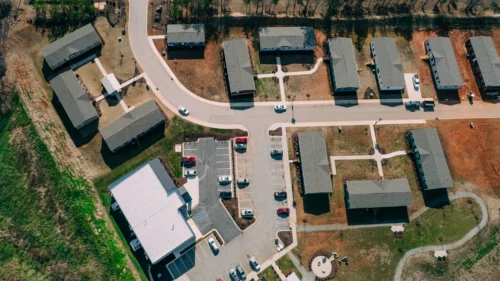
Today, Restoration Village is three homes away from completing its 22-house community. The vision is expanding, with Alumni Housing now underway across South Carolina.
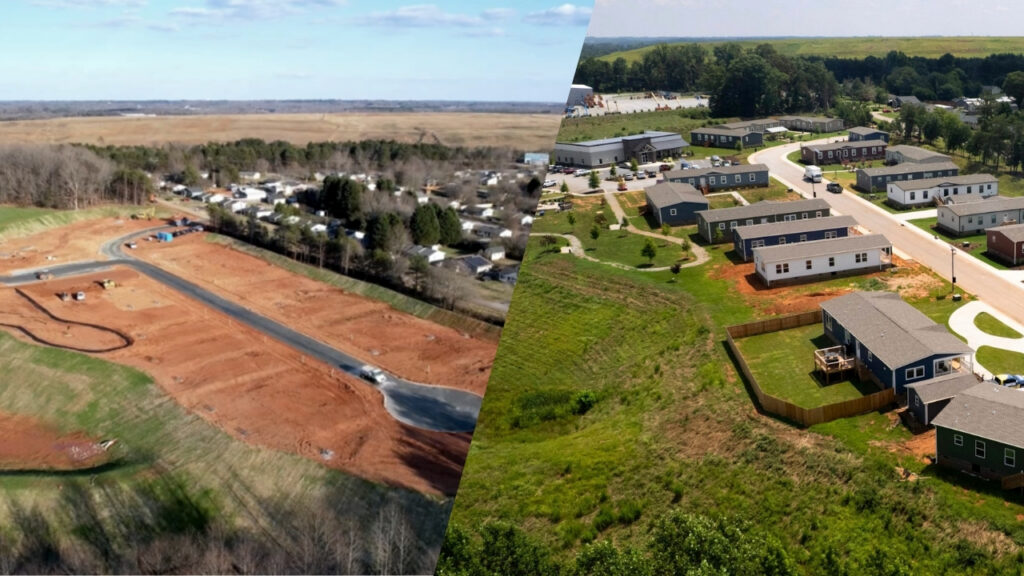
Restoration Village exists because a small group of people chose faith over financial common sense during the wrong moment in history, and watched it become exactly the right moment.
God provided because of their faith in Him and their desire to see JUMPSTART expand further to serve even more individuals.
Leverage, Not Lone Wolf Ministry
Steve could have gone a different direction with his life after Halftime. He could have started his own ministry or quietly taken food to people in need on his own time. Those things matter. But Steve calls that the lone wolf path, one person doing what one person can do alone.
What drew him to JUMPSTART SC instead was leverage, not just the potential for impact, but the infrastructure already in place to achieve it at scale. Nobody joining JUMPSTART SC has to rewrite the handbook for the inside program or reinvent the wheel. They are building on something already standing, joining people already working in the vineyard.
Because that structure existed, Steve's strategic mind saw an opportunity most people would have missed entirely. Restoration Village was not only going to change lives inside Spartanburg County and beyond. It was going to become proof of concept for a model that other states desperately needed.
Local to National Catalyst
As word of Restoration Village's success spread, first through South Carolina's own prison system, then through the informal networks Departments of Corrections use at national meetings, calls started coming in from Ohio, then Georgia, then Florida, then Texas. States wanted to know how to use the Village's model.
Today, Steve serves as Strategic Advisor to JUMPSTART SC, helping figure out how to carry what was built here in Spartanburg to communities across the country, without losing the culture that made it work in the first place. He calls South Carolina the laboratory for the nation, a phrase he does not use lightly. It is where the model was proven, and it is the template every future location will be measured against.
Steve does all of this while continuing his day-to-day work as Senior Vice President, Financial Advisor at Wealth Enhancement, giving his professional expertise to the same mission he has already given his weekends, a capital campaign, and more than a decade of his life to.
One Beggar Helping Another Beggar Find Food
Ask Steve what keeps him coming back, and he will tell you it is not really about what he has to offer the people JUMPSTART serves. He describes it as one beggar helping another beggar find food, a mutual exchange rather than a one-directional act of charity. The volunteers who go inside prison each week are not simply saving anyone.
They are being changed themselves, in ways Steve says he still cannot fully explain, except to say that when you hang around JUMPSTART long enough, you start seeing God at work in ways that are hard to ignore. That is what Don Williams modeled for Steve more than fifteen years ago, cleaning at night so he could walk back into a prison the next morning. It is the same culture asking to be handed forward today.
You Do Not Have to Have It All Figured Out
Steve did not start as an expert in prison ministry or reentry work. He started as a lawyer and financial advisor who watched one man do something that made no sense to him, then spent a year figuring out what he himself was built for.
That is the invitation JUMPSTART SC extends to you, too.
If you are considering giving to finish the village: Your support funds more than a home or a program. It funds the structure that turns hope into a real pathway from incarceration to restoration.
If you are considering volunteering: You do not need a law degree or three decades in finance. You need what Steve had, a heart ready to show up again and again. Both inside volunteers and transitional program volunteers are not just saving people. They are being changed, one conversation at a time.
Watch the Podcast Episode
Since 2008, JUMPSTART SC has walked alongside incarcerated men and women across South Carolina, offering Christ-centered discipleship on the inside and real support after release. Housing, employment, mentoring, and a community that doesn't give up on them. Transformation like this is only possible because people like you believe in second chances.
Your gift helps put someone in the Word behind bars. It gives them a place to land when they walk out. It helps rebuild the families that addiction and incarceration tore apart. Every dollar you give goes toward changing a life, and through it, a family and a community.
Will you be the reason someone finds hope today?