The Only Thing That Changes Is Everything

The Only Thing That Changes Is Everything
Ask Robert Solomon who he is, and he doesn't start with his résumé. He starts with a confession.
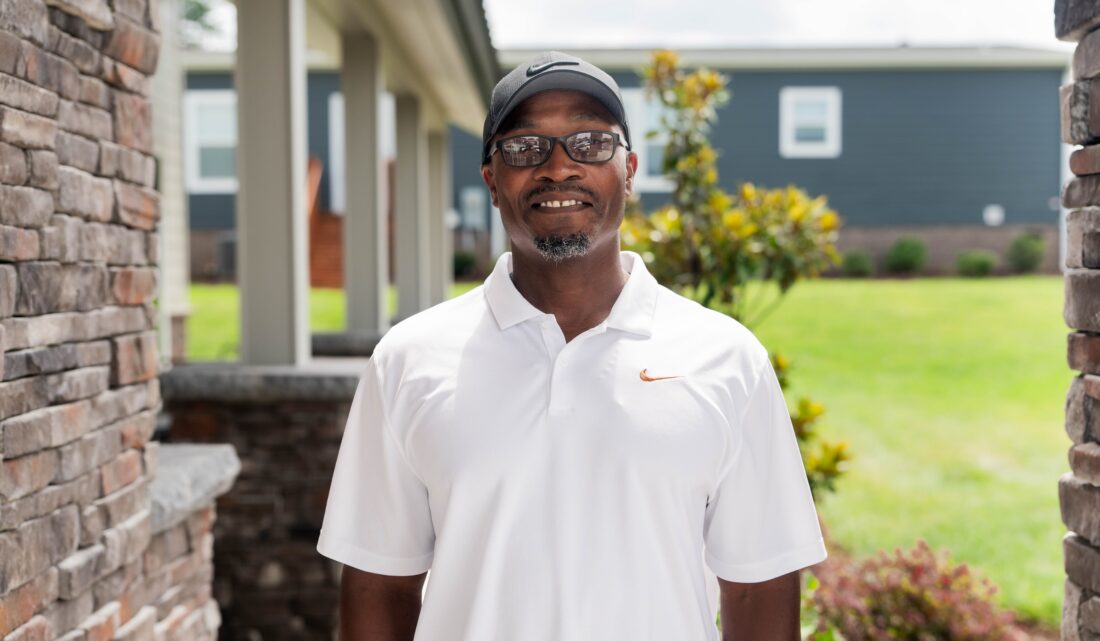
"It's very evident what I'm capable of without God's help," he says. At 46, Robert is an entrepreneur who has owned and operated multiple businesses in the South Carolina Lowcountry. He's a husband, a father, a worship leader who is quick to point out he isn't actually a singer. He loves the water, having grown up near the beach. He's curious about health and natural living. But more than anything, he describes himself as a server, someone who has learned that the point of his life is to give.
That wasn't always true. The story of how he got here runs straight through addiction, the loss of his family, and more than four years behind bars.
A Slow Fade
Robert first got saved in a rehab program at 24 years old. For years afterward, he says, he was deeply in love with Jesus. But somewhere along the way, the center of his life began to shift.
"When you start prioritizing the things that you want for your life over what God's will is for your life," he reflects, "no matter how successful you are, it's a recipe for disaster."
He started chasing goals that had nothing to do with the life God intended for him: building an image, living for the approval of other people. Outwardly, things looked good. He became a known martial arts athlete; people recognized his name. He had a thriving auto detailing and maintenance business, employees, multiple vehicles, a bright future, and a strong relationship with his wife and family.
Then came a string of injuries. Four surgeries on his shoulder and back over roughly three years left him on opioid pain medication. He's careful not to point fingers.
"People say it's the doctor's fault," he says. "I shouldn't have taken the first one. I knew better than that." Taking responsibility, he believes, is exactly where healing has to begin: "If you stay there and take responsibility, and you seek God for your life... you feel things through the Word, through accountability with people, you might not destroy your life and your family's life."
What followed was, in his words, "a slow fade in the wrong direction" that ended in full-blown addiction. Within a few short years he lost his businesses, lost his family, and ended up in the streets. Eventually he faced the very real possibility of spending the rest of his life in prison.
Crying Out
It was at his lowest point that Robert finally turned back.
"That's when I went to God," he remembers. "Life is completely gone. There's nobody here. God, help me."
He describes the strange grace of that moment, being stripped of everything and everyone he'd been depending on, until there was no one left to lean on but Christ. "For the first time in my life, I stopped trusting the people around me to save me," he says. "I had to deal with myself." It was, he says now, "a really good place to be."
What Prison Taught Him
Robert spent a little over four years incarcerated, and he's adamant that the time was not wasted. He came to see it as a launching pad rather than a dead end.
"I learned a lot about what not to do," he says. Looking around, he recognized in others the very patterns he didn't like in himself: selfishness, laziness, and the hopelessness that he says is "contagious" in that environment. "It blows my mind that people who are incarcerated aren't taking the time and using it wisely," he says. "You literally have nothing to do, so do something. Why wouldn't you want to come out ahead?"
He chose to use it. The whole time he was inside, he says, he made sure there was always someone in the Word alongside him. "If you're my roommate, you're probably going to be doing what I'm doing, because I'm not going to be doing what you're doing."
He also points to the people who walked with him. Volunteers and fellow believers showed up week after week, and Robert is quick to name them. One was Andre Nourgart, a JUMPSTART volunteer who became one of the steadiest voices in his life on the inside, showing up faithfully to teach, encourage, and disciple him, and helping Robert see that someone on the outside believed he was worth investing in. Another was a man named Bob, who reminded Robert of his own father: stubborn, hardheaded, and head-over-heels in love with the Lord. Bob recently passed away, and Robert speaks of him with obvious affection. A fellow inmate named Carlos became a daily companion in faith, too, the two of them talking about the Lord and keeping each other on the right path.
A Message for Those Still Inside
When this conversation was recorded, Robert knew parts of it might be watched by men and women who are currently incarcerated and haven't yet turned to Christ. He had a direct word for them.
"The great thing about rebirth," he says, "is that the only thing that changes is everything."
He frames incarceration not as God abandoning a person, but as God meeting them. "The advantage that incarcerated people have is tremendous," he insists. "They have a unique opportunity to establish a dependence on Christ." The low point, he argues, is precisely the place to look up.
He talks about the relentless flood of thoughts a person faces in that environment, "months and months of just thoughts coming at you," and the power of taking each one captive. "You don't have to live like this. You don't have to think like this. You don't have to feel like this. You can have a new life."
Underneath the crime and the hardness, Robert sees wounded people who don't yet know who they really are. "They think they're this hurt child, this hurt person, and they'll live in pain forever," he says. "They don't know there's a spirit inside of them that's meant to come alive."
Coming Home
Robert was released on May 24, 2024, and the road back started immediately.
A friend he'd known since middle school picked him up from the station and didn't just drop him off. He gave Robert a place to stay, handed him the keys to a truck, and put him to work. "He was my landlord, my best friend, and my boss," Robert laughs. It was humbling, and at times complicated, but it gave him a foothold. From there he picked up side work, connected with a contractor doing walk-in shower installations, and steadily built toward standing on his own.
Just as important, he got plugged into a church, a historically Black congregation right across the street from where he was staying. His mother-in-law pointed him toward the church his wife's family belonged to, and Robert sought out the pastor for accountability. "What better way to be held accountable than the church?" he says. A group of believers there helped him with clothes and basic necessities, and he "hit the ground running."
Restored
Of everything God has given back, it's his family that moves Robert most.
He and his wife, Casey, met in church years ago and built their early relationship around their faith. She didn't have her first kiss until their wedding day. They were married about nine years before his pride, addiction, and eventual incarceration tore the marriage apart, ending in divorce.
Winning her back became one of his quiet missions behind bars. From his cell he began writing to her, letter after letter, owning the damage he had caused and letting her see the man God was rebuilding rather than just telling her about him. The pursuit continued after his release and stretched on for roughly a year and a half. She wasn't sure at first. But as she watched him stay on the path and serve God, something clicked. The two remarried, and not long after welcomed a baby they weren't expecting. As of this conversation, their little one was five months old.
"I don't deserve this," Robert says quietly. "I don't deserve getting my family back. The relationship I have with my daughters and my wife, with her father and my daughters' grandfather. I'm grateful. I don't deserve that."
He doesn't gloss over the wreckage, either. "It hurts me to think of all the damage," he admits. "At first I was just mad that I got caught." It took a long, hard look in the mirror to get past that. And yet he wouldn't undo any of it: "I would not go back and change anything, because it's probably why I'm where I'm at."
Building Something New
Today Robert owns and operates Solomon Home, LLC, a home services business in the North Charleston and greater Charleston area. He's moved away from full remodels toward focused services, including:
- Acrylic shower remodels and walk-in showers
- Walk-in tubs, designed for elderly customers and anyone with mobility challenges, with seating and easy-access doors
- Whole-house water filtration systems, including carbon filters and softeners
- Dedicated drinking-water filtration for customers who want clean water at the tap
The company also operates Solomon Home Water Solutions. There are real hurdles. A criminal background can complicate something as basic as advertising. But Robert is determined that the business not be about him. "I just want to make sure it's not about me," he says. "If they don't want to do business because of my background, I'm okay with that. I'll be fine."
What lights him up most, though, isn't the showers or the water systems. It's the men standing next to him while he installs them. Robert hires and works alongside people who are walking the same road he once walked, several of whom have battled addiction themselves, and he sees the job as a chance to be the kind of steady, godly example he needed when he was at his lowest. Now that he's on the other side of it, he gets to be a light to the men he employs and the people he meets around his community, showing them with his own life that change is possible. That, he says with real passion, is the part of this work he loves most.
The Verse He Lives By
Ask Robert for a favorite passage of Scripture and he'll point you to Proverbs 3:5-6: Trust in the Lord with all your heart and lean not on your own understanding; in all your ways acknowledge him, and he will make your paths straight.
He doesn't treat it as a gentle suggestion. "Trust in the Lord with all your heart is not a request, it's a demand," he says. "With all your heart means there's nothing in reserve. No reservations, no secret plan you're holding onto. There's nothing we can't give the Lord."
He lingers on the word acknowledge, tracing it back to the Hebrew yada, to know with reverence, with deep love. "It means to bring Him along with you through the day," Robert explains. "In every situation."
That, he says, is the whole point of where his life has landed. "It challenged me not to be the old self," he says, "but to know God for a new perspective, new understanding, new wisdom, and new life."
Watch the Full Interview here:
Robert's story is what JUMPSTART SC exists to make possible. Since 2008, this faith-based prison ministry has walked alongside incarcerated men and women across South Carolina, offering Christ-centered discipleship on the inside and real support after release: housing, employment, mentoring, and a community that doesn't give up on them.
Stories like Robert's are funded by people who believe in second chances. Your gift helps put someone in the Word behind bars, gives them a place to land when they walk out, and helps rebuild the families that addiction and incarceration tore apart. Every dollar goes toward changing a life, and through it, a family and a community.